Table Of Contents
Intro
|
|
|
|
| Scene with all lights affecting all objects | Same scene demonstrating light linking | Same scene demonstrating shadow linking |
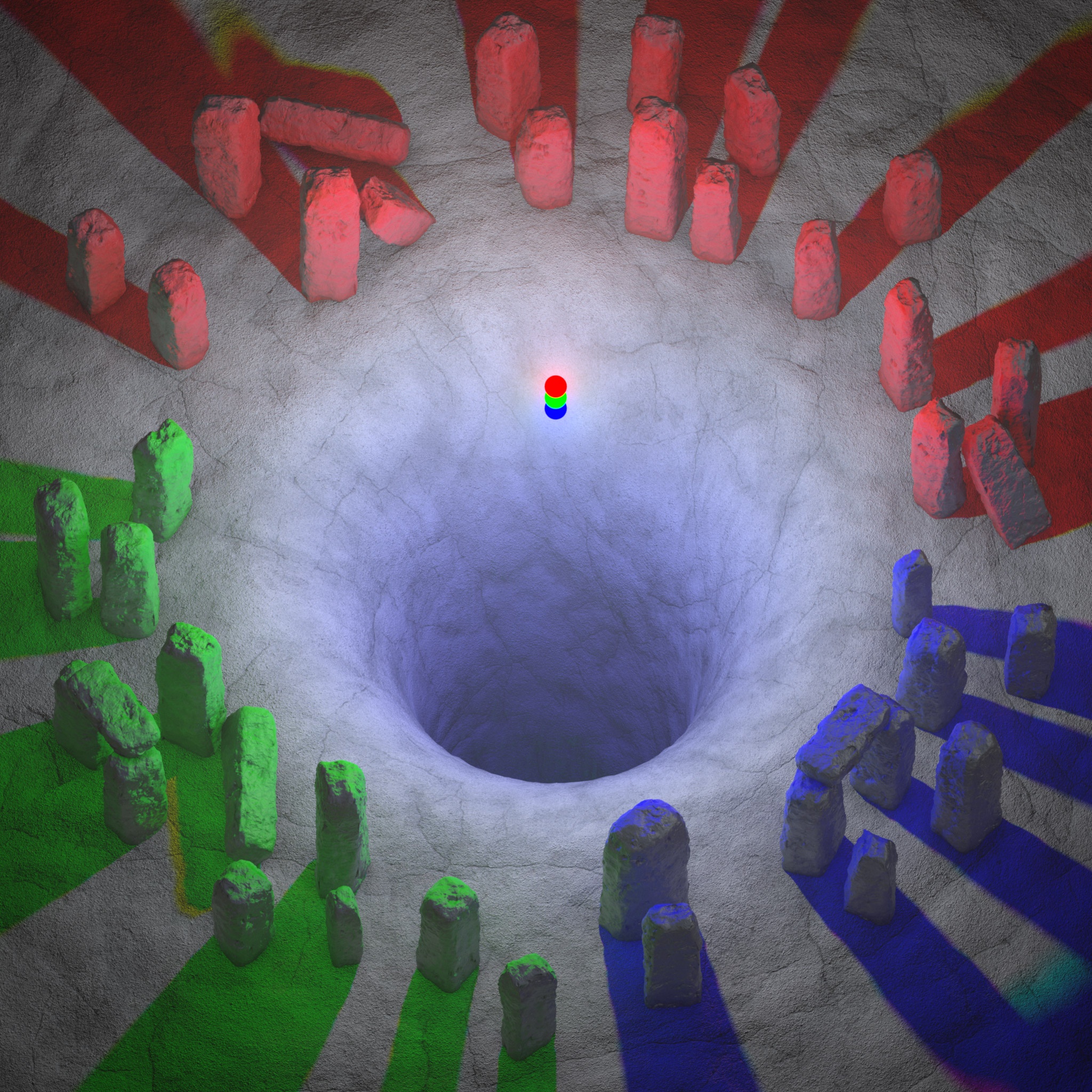
By default every light in a scene illuminates and casts a shadow of every object in a scene. However there are times when you want specific lights to only affect certain objects. Even further than that you might want a certain light to illuminate an object without casting a shadow.
Light linking lets you control the affect a light has on your scene objects on a per-object basis.
Shadow linking allows you to break the casting of shadows from lights on a per-object basis.
Each of these methods is covered in detail below.
Volume objects are not compatible with light linking.
Light Linking
The example scene below has a simple lighting setup with only 3 lights: a visible red, green, and blue light that are currently affecting all the objects in the scene.
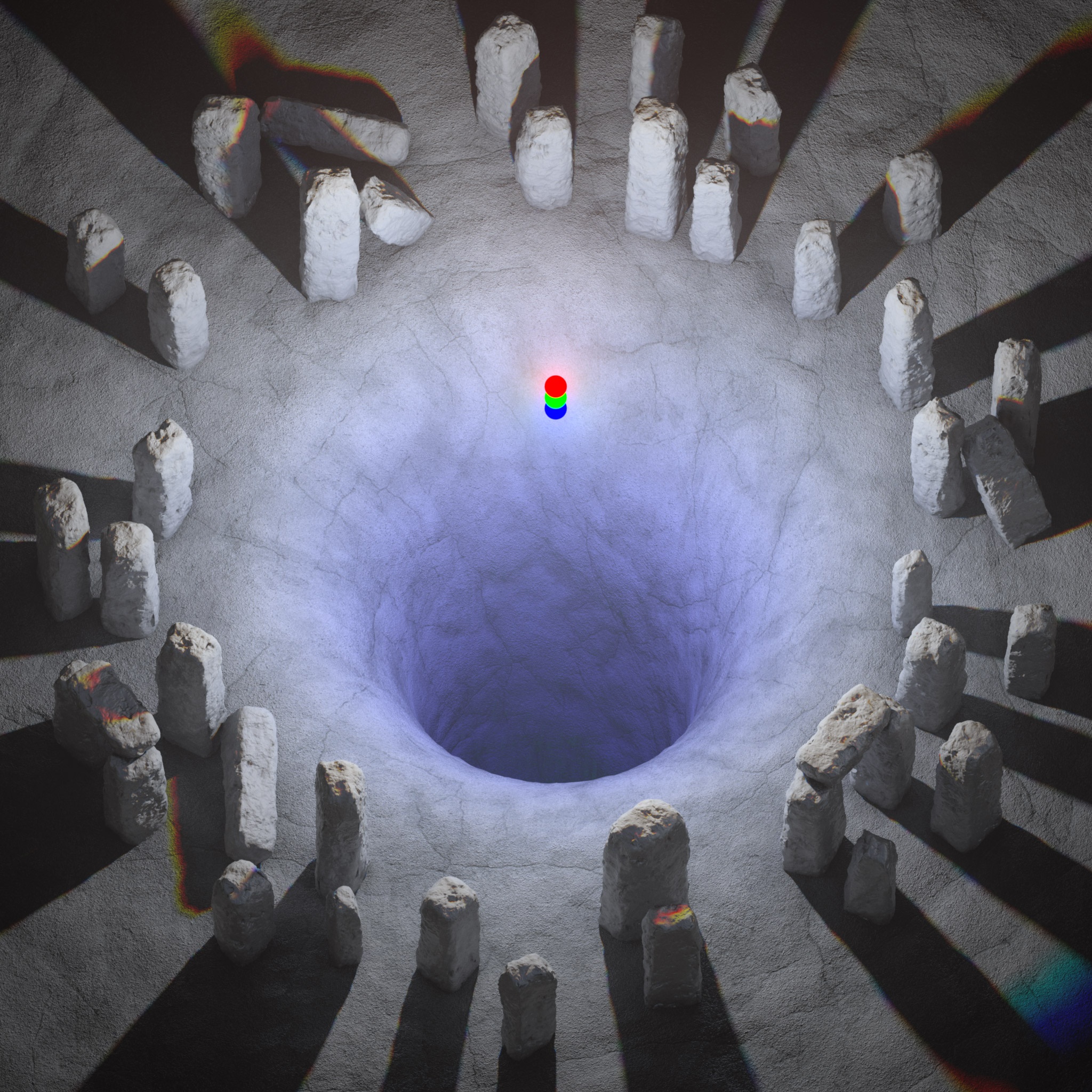
Example scene with all lights affecting all objects
This all white scene is helpful in interpreting what is happening further down the road when we start introducing some light linking into the scene. As you can see in the image above every object is white due to the red, green, and blue light mixing together. The slight color shifts here and there are simply due to the slightly different light positions. It is important to remember that in all the examples below all 3 lights are always linked to the ground object.
In Max you can control light linking by going to a Redshift Light's "Shadow" section and clicking on the "Exclude/Include" button as pictured below:
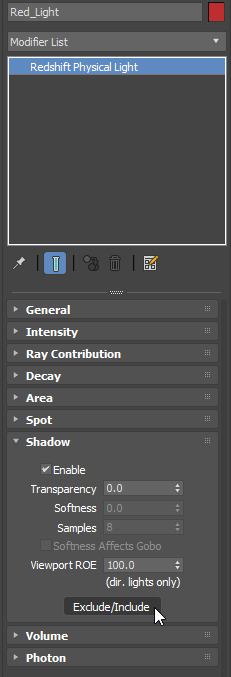
3ds Max's Light Linking options
This brings up a light linking window where you can set the light linking mode to either "Exclude" or "Include" in which case the light will either include or exclude the objects on the right hand side of the window. You can also set light linking to 1 of 3 different modes.
- Illumination: When using this mode the light will include/exclude objects from recieving illumination from the light. The light will still cast shadows for objects.
- Shadow Casting: When using this mode the light will include/exclude objects from casting shadows from the light. The light will still illuminate objects. For more information on shadow linking please refer to this section.
- Both: When using this mode the light will include/exclude objects from both recieving illumination and casting shadows from the light. Any objects not included in the list will be ignored.
To move objects into and out of the light linking relationship you can double click on objects in the "Scene Objects" list and the light linking list to move them back and forth or use the double arrow buttons in the middle between the two lists as seen below:
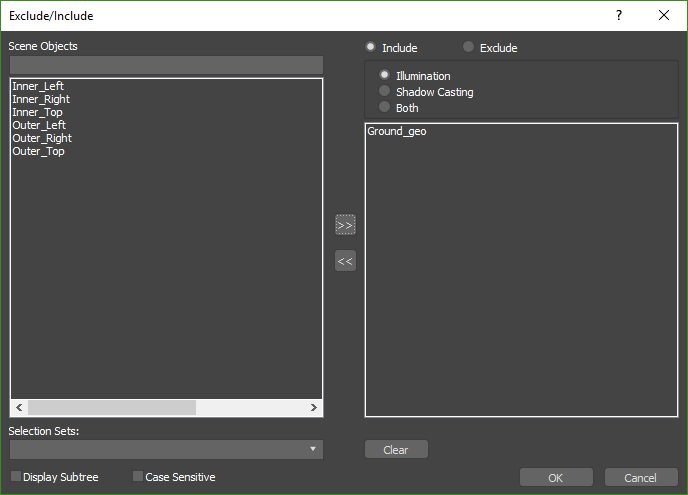
3ds Max Light Linking window
To start the standing rocks in the example scene have now been linked to the 3 different lights as pictured below:
|
|
| Red light linking setup |
|
|
|
|
| Green light linking setup |
|
|
|
|
| Blue light linking setup |
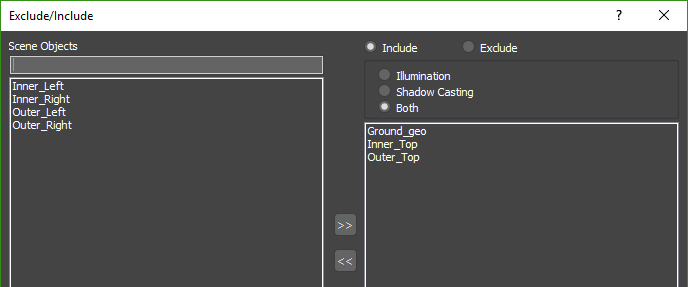
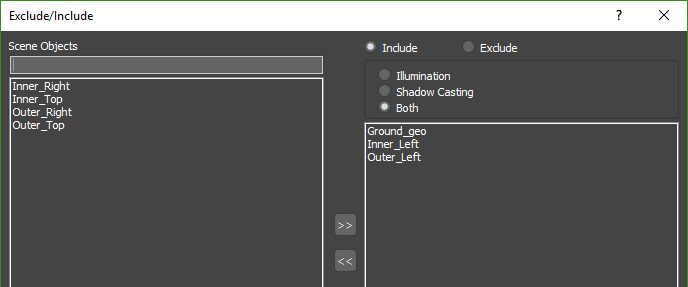
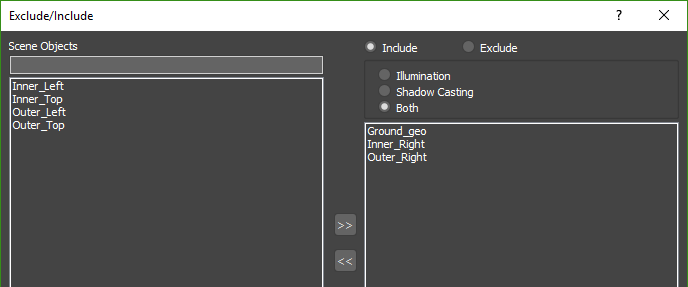
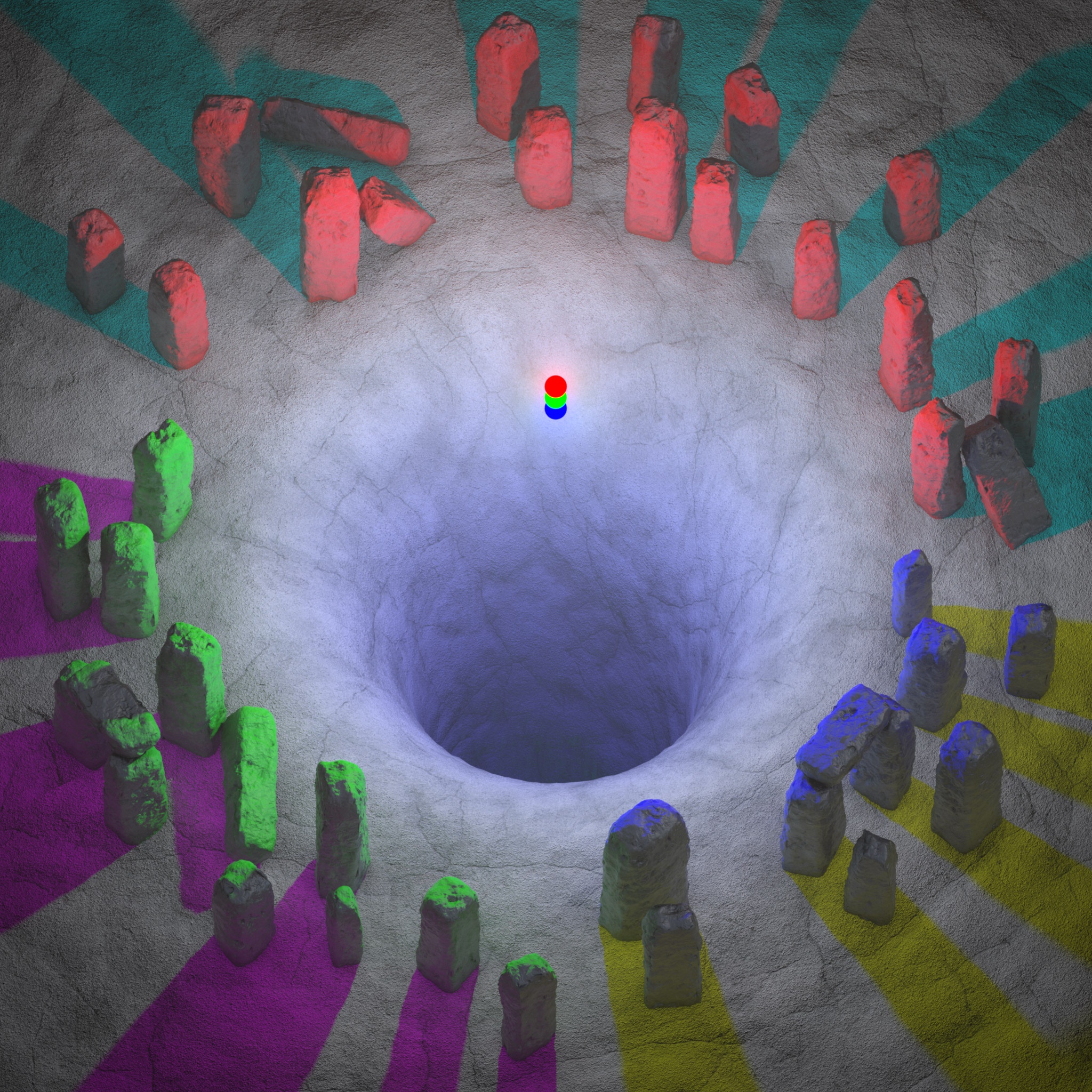
Example scene with the light linking setup above
As you can see above, the rocks have been split up into thirds each with their own light exclusively affecting each third. The ground object remains affected by all 3 lights which is why the shadow color of each rock section is the additive result of the remaining lights still casting in this area. For example, the red rocks at the top of the image are receiving light and casting shadows from the red light alone, however, the blue and green lights are still casting light in this shadowed region resulting in cyan colored shadows.
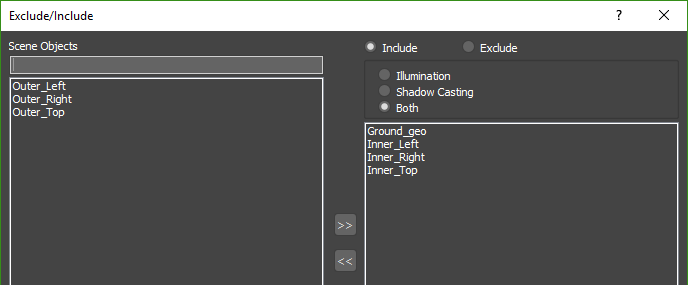
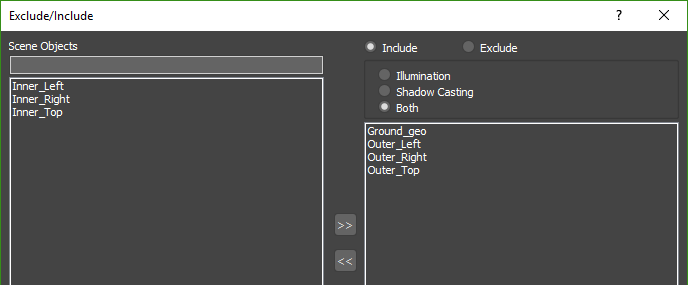
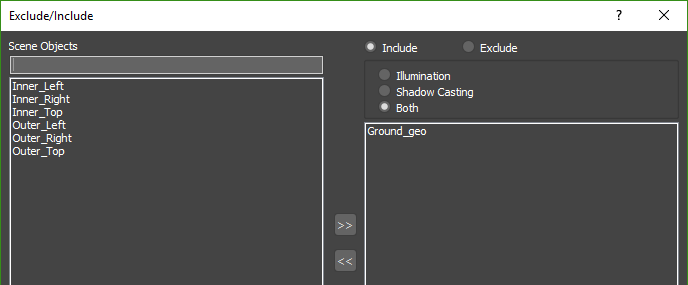
For another example, the inner circle of rocks and outer circle of rocks will be linked to completely separate lights to demonstrate another potential side effect of light linking. The inner circle of rocks is linked to the red light and the outer circle is linked to the green light as pictured below while the blue light excludes all the rocks as pictured below:
|
|
| Red light linking setup |
|
|
|
|
| Green light linking setup |
|
|
|
|
| Blue light linking setup |
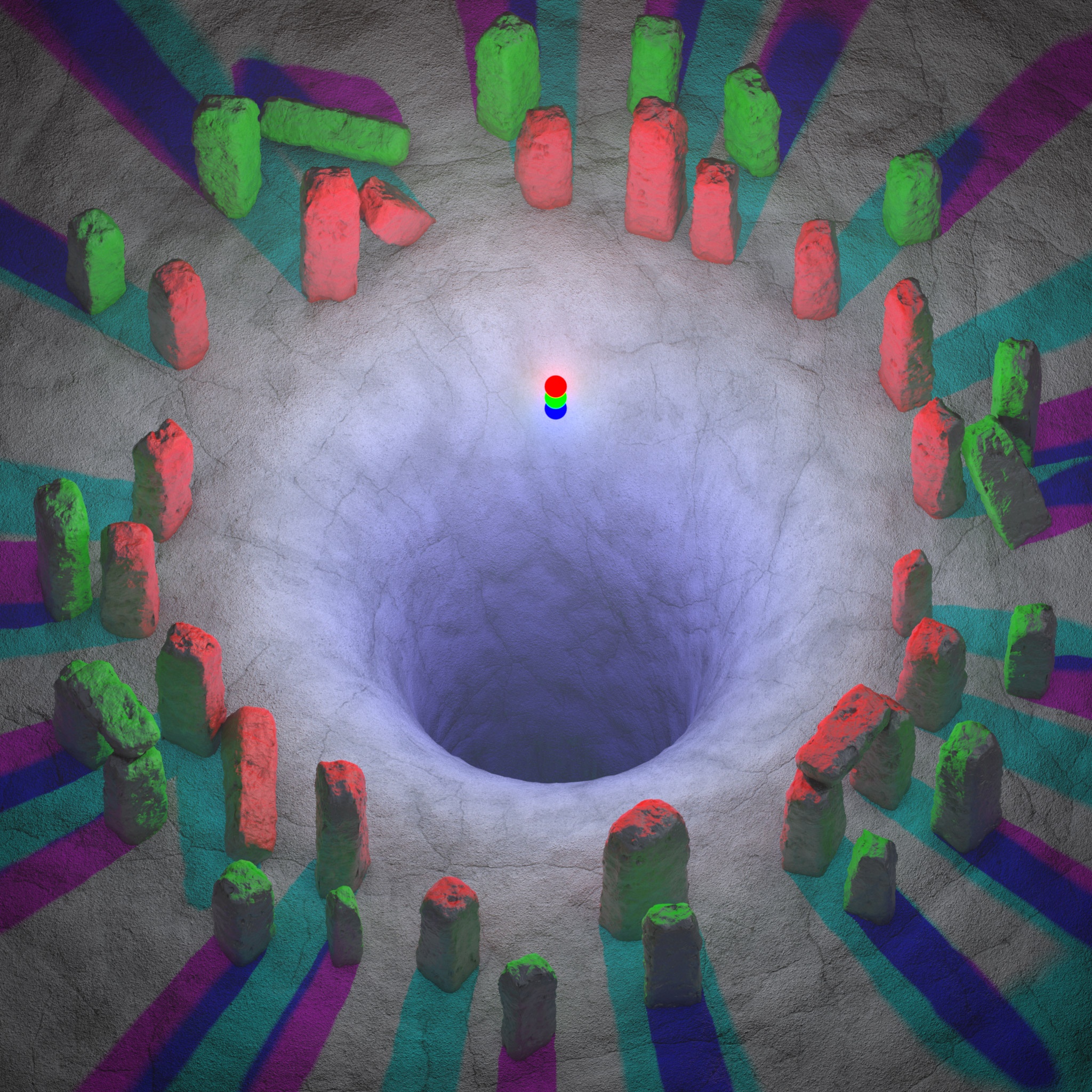
Example scene with the light linking setup above
Now with this light linking setup you can see we are getting double shadows and surreal lighting with these rocks. This is due to the fact that the green light is completely ignoring the inner circle of rocks and only illuminating and casting shadows of the outer circle of rocks. You can see that the green light hitting the outer rocks is even bouncing onto the backside of the inner rocks due to global illumination. The double shadows occur when the shadows from the inner red rocks and the shadows cast by the green light coincide with one another, resulting in the darker blue shadow seen in the picture above.
Shadow Linking
Shadow linking allows you to break from the expected result of a light hitting and object and thereby casting a shadow. With shadow linking you can have a light illuminate an object but not cast a shadow for it. To control shadow linking set the Exclude/Include feature of your light (as discussed above in the light linking section) to "Shadow Casting." Now any objects included or excluded will have their shadows cast or not cast accordingly.
Using the same example scene as in the light linking section the shadow linking example scene below has been set up so that a light has had its shadow link broken with a third of the rocks, the settings below were used:
|
|
| Red light linking setup |
|
|
|
|
| Green light linking setup |
|
|
|
|
| Blue light linking setup |
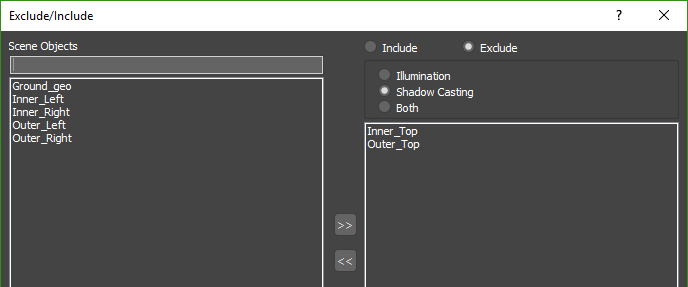
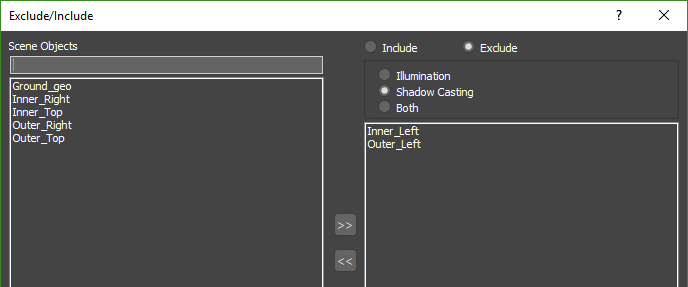
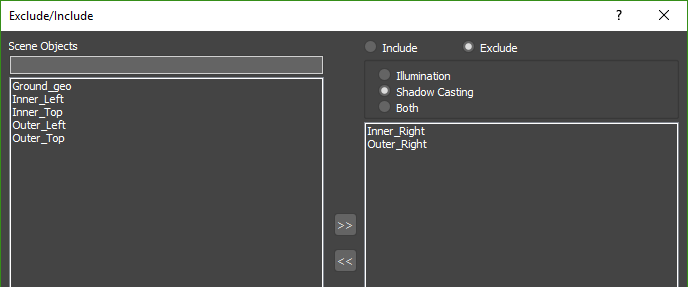
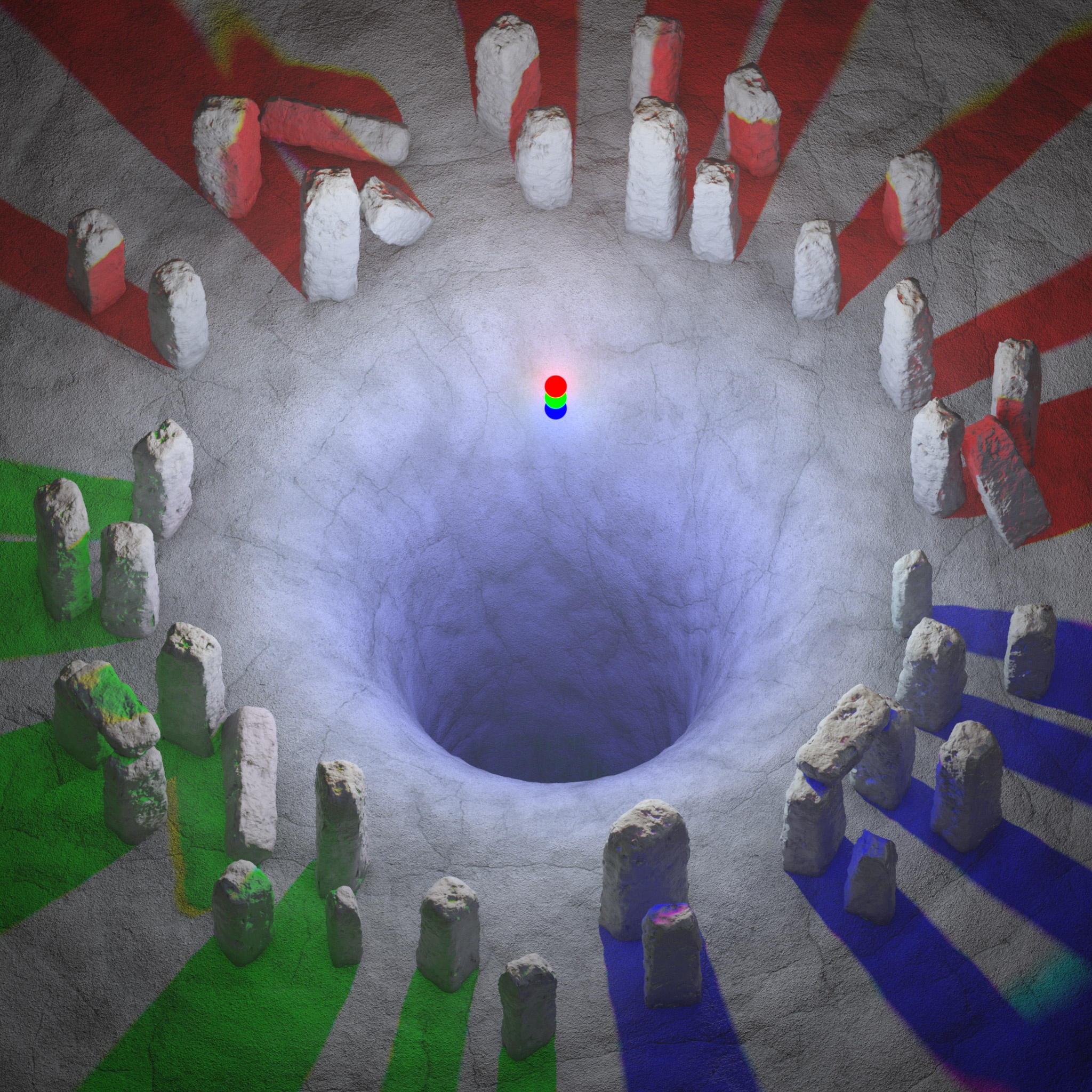
Example scene demonstrating shadow linking
As you can see in the picture above the lights are illuminating every object in the scene resulting in the white diffuse lighting. However since the red, green, and blue lights have had their shadow casting excluded from a different set of objects the shadow color results in the shadow color of the remaining two lights added together instead of the black shadows that would be expected for a scene traditionally lit in this way.
For example, the top third of rocks has had its shadow casting broken with the red light which means only the green and blue lights are casting shadows for this group of rocks. Since the shadow color of a green light is magenta and the shadow color of a blue light is yellow they are added together, resulting in the red shadows above.